
Which Section of Antelope Canyon is Best for Anyone with Mobility Issues?
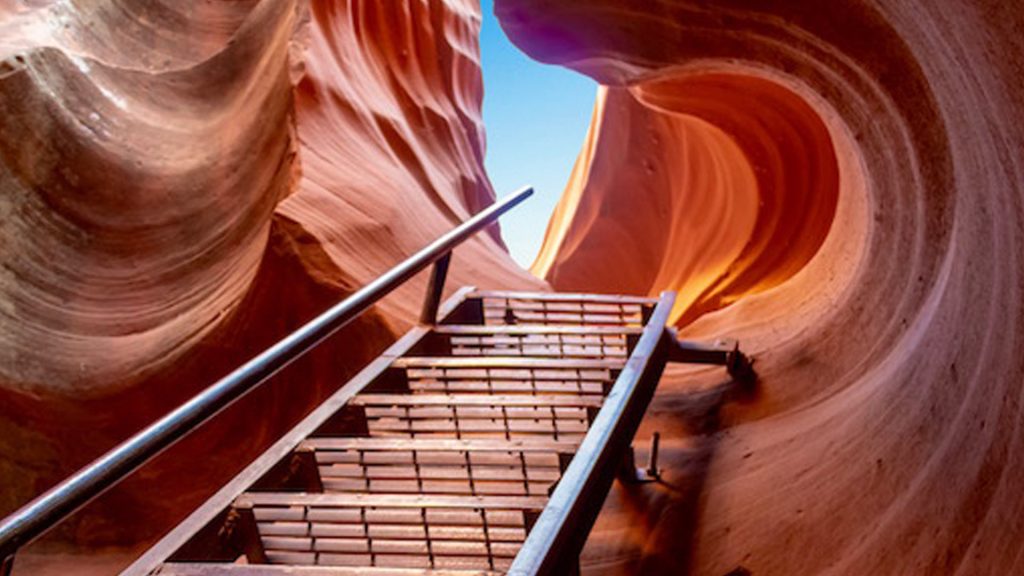
Antelope Canyon, located in the heart of the American Southwest near Page, Arizona, is one of the most famous natural wonders in the United States. Known for its otherworldly beauty, this narrow sandstone canyon is a photographer’s paradise, with swirling walls and shafts of light that penetrate deep into the canyon floor. However, despite its breathtaking allure, Antelope Canyon presents unique challenges for people with mobility issues. The terrain, consisting of narrow pathways, steep stairs, and uneven surfaces, makes it difficult for some to fully experience the canyon’s majestic beauty. For those with physical limitations or mobility impairments, knowing which section of Antelope Canyon is most accessible is crucial.
The Basics of Antelope Canyon
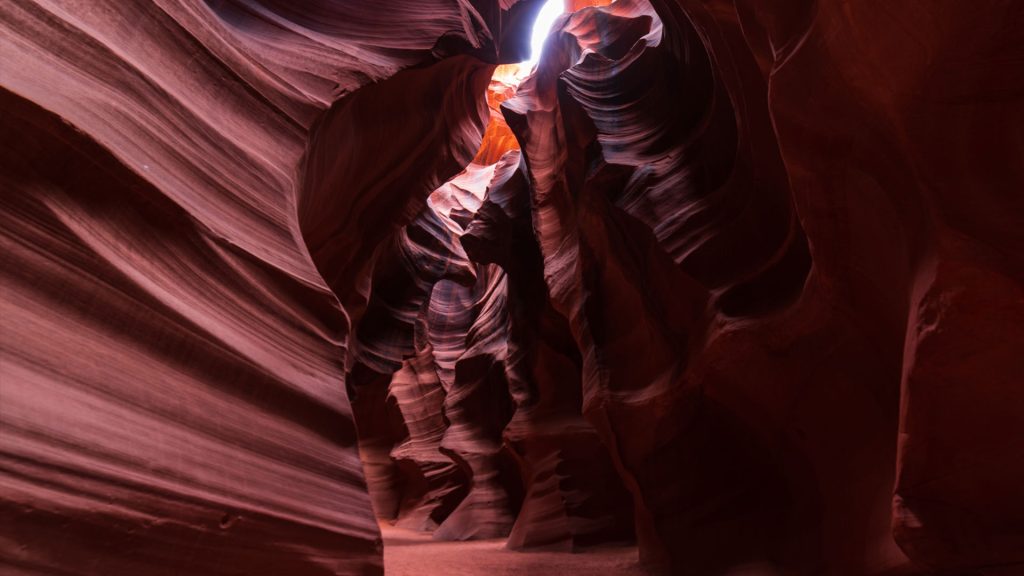
Antelope Canyon is made up of several sections. Generally, the most available to the public are Upper Antelope Canyon, Lower Antelope Canyon, and Antelope Canyon X. Both sections are on Navajo land and have become some of the most photographed natural landmarks in the world. Visitors flock from all over to experience the mesmerizing interplay of light and shadow that shines through the canyon’s narrow passageways.
Upper Antelope Canyon is the most accessible of these options, with wide, open passages and relatively level ground.
Lower Antelope Canyon, on the other hand, is often considered more physically challenging due to its narrow passages, steep staircases, and uneven terrain.
Antelope Canyon X has been developed in recent years, offering another option for those with mobility considerations.
It’s important to understand the terrain and why some sections are more suited for visitors with mobility issues.

Terrain and Challenges at Antelope Canyon
The terrain inside Antelope Canyon is often rough, rocky, and uneven, which makes it difficult to navigate for people with mobility issues. The canyon walls can be very narrow in places, with uneven footing and stairs that require careful navigation.
Upper Antelope Canyon is a slot canyon, meaning it’s a narrow canyon formed by the erosion of rock, typically due to water flow over thousands of years. Its walls can soar up to 120 feet high in places, and the narrow floor often requires visitors to step over rocks and uneven surfaces. However, the path is mostly flat, and it doesn’t require significant climbing or intense physical exertion. Visitors enter at ground level, with the high canyon walls up on both sides. There is a stairway to exit the canyon, which is comparable to regular flights of stairs.
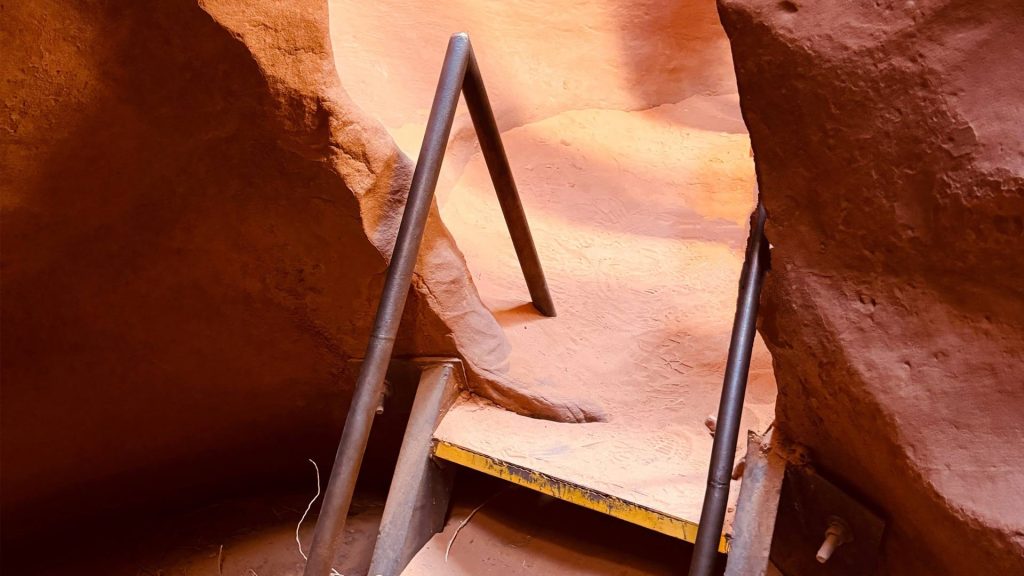
Lower Antelope Canyon, while just as beautiful, has a more rugged, vertical layout. Visitors must descend into the canyon via steep stairs carved into the rock, which can be challenging for those with limited mobility or who use wheelchairs. The metal stairs are solid and secure and are attached to the rock walls. They also have handrails, but the stairs are fairly narrow. Once inside, the path is winding and uneven, with some tight spaces that make it difficult to move freely.
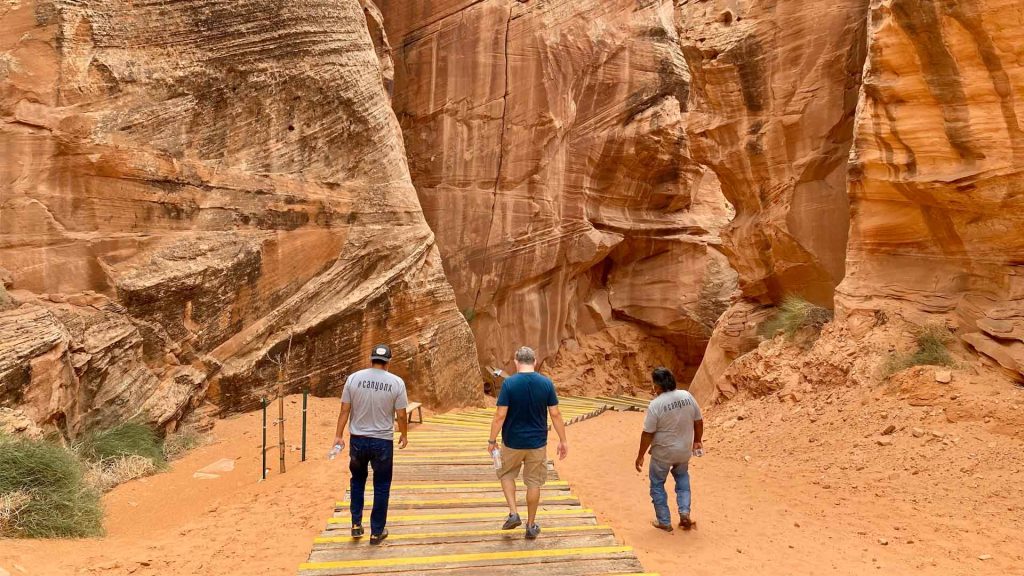
Antelope Canyon X is a more recently developed section that is a hybrid of the two other sections in terms of terrain. It’s a slot canyon like the others, but the paths are slightly wider and less steep. While it still features some narrow spaces, the overall experience is somewhat less physically demanding than Lower Antelope Canyon. To arrive at the entrance, guests must walk down a long dirt roadway, flanked by railroad ties, allowing guests to simply walk down the road, or alongside using the larger steps made by the ties.
None of the sections of Antelope Canyon offer elevators. Wheelchairs or scooters are not permitted in any section.
Upper Antelope Canyon: The Most Accessible Option
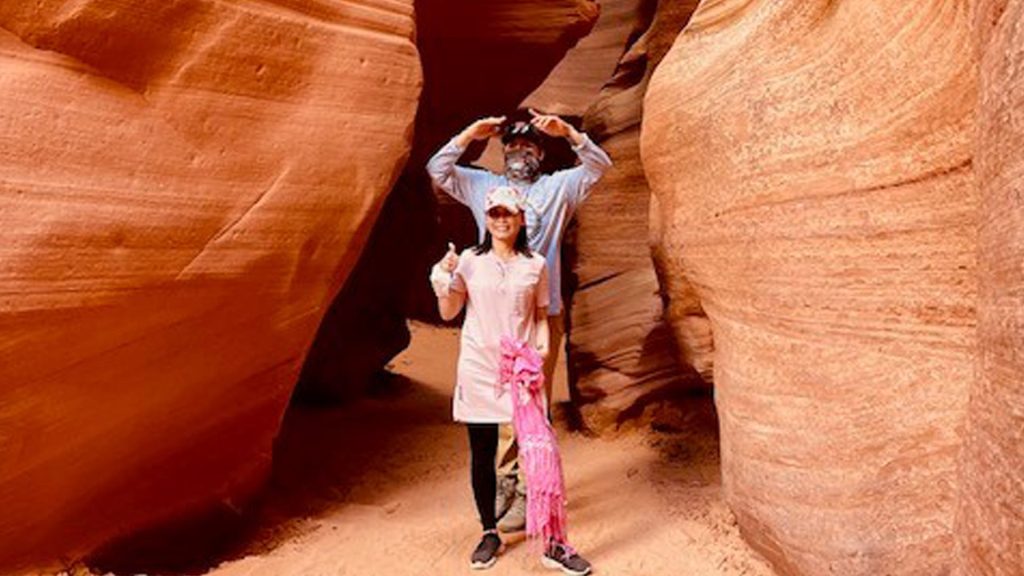
For individuals with mobility impairments, Upper Antelope Canyon is by far the most accessible section of the three. This section was the first to be widely opened to tourists and is, in many ways, designed with ease of access in mind. While it still presents some challenges, the overall layout is more forgiving than that of Lower Antelope Canyon.
Features and Accessibility:
Flat, Wide Paths: Upper Antelope Canyon features relatively level ground and wider paths compared to Lower Antelope Canyon. The passageways are narrow but not as tight, making it easier to navigate through the canyon.
Minimal Staircase Use: One of the key benefits of Upper Antelope Canyon is that it requires minimal use of stairs. There are a few stairs at the exit, but the vast majority of the experience involves walking on a flat, level surface.
Walkable Terrain: While there are some rocky patches, they are generally not as challenging as the steep climbs and narrow corridors in Lower Antelope Canyon.
Guided Tours: Since access to Antelope Canyon is restricted, visitors can only enter through guided tours provided by licensed Navajo guides. These guides are knowledgeable about the canyon’s geology and history, and they also ensure the safety of visitors.
The tours in Upper Antelope Canyon are relatively short, typically lasting approximately one hour. This makes it possible for those with mobility concerns to enjoy the beauty of the canyon without undertaking an overwhelming journey. The pace of the tour is usually moderate, and the paths are more forgiving compared to Lower Antelope Canyon.
Wheelchair Accessibility: While Upper Antelope Canyon is more accessible for people with limited mobility, it is important to note that it is not wheelchair accessible.
Lower Antelope Canyon: A More Challenging Option
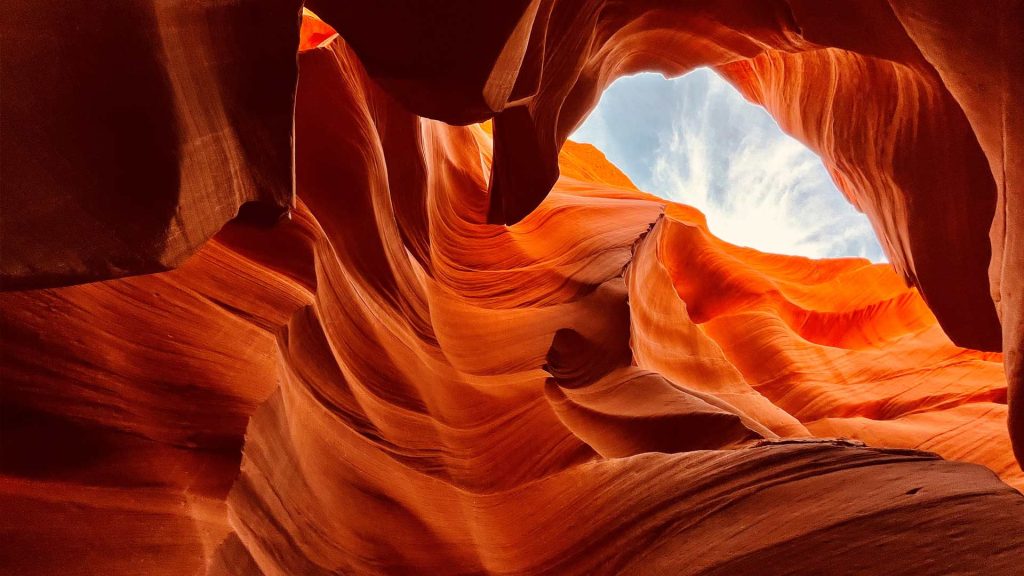
Lower Antelope Canyon is widely considered to the most physically demanding of the three main areas. It’s a narrow, winding canyon with steep stairs, uneven rock surfaces, and narrow corridors. While the beauty of the canyon is undeniable, the difficulty of navigating it makes it unsuitable for those with significant mobility issues.
Features and Accessibility:
Steep Stairs: One of the most significant challenges in Lower Antelope Canyon is the steep descent required to enter the canyon. There are several sets of stairs that descend into the canyon, which are steep and can be difficult to navigate for people with mobility issues.
Uneven Terrain: Once inside, the terrain remains challenging. The path is often uneven, with rocky steps and tight passageways that are difficult for those with walkers or wheelchairs to navigate.
Tight Spaces: The narrow passageways in Lower Antelope Canyon can make it difficult for people to move freely. There are areas where you may need to duck or squeeze through small openings. These tight spaces can present a challenge for those with larger wheelchairs or mobility devices.
Wheelchair Accessibility: Lower Antelope Canyon is not wheelchair accessible. The steep stairs, narrow passageways, and uneven terrain make it impractical for visitors using wheelchairs. For individuals with limited mobility, it is best to skip Lower Antelope Canyon altogether.
Guided Tours: Like Upper Antelope Canyon, Lower Antelope Canyon also requires guided tours. However, the tour experience here is more physically demanding, with more time spent climbing stairs and traversing uneven ground. Visitors who have difficulty walking or standing for extended periods should consider whether Lower Antelope Canyon is appropriate for them.
Antelope Canyon X: A Newer and Slightly More Accessible Option
In recent years, Antelope Canyon X has become a popular alternative for those seeking a more accessible experience. Located near the other sections, Antelope Canyon X features some of the same striking sandstone formations but with slightly less challenging terrain.
Features and Accessibility:
Wider Paths: Antelope Canyon X generally offers wider passageways and less uneven terrain than Lower Antelope Canyon. This makes it easier to navigate, especially for those using walkers or other mobility aids.
Fewer Stairs: While there are still stairs involved, Antelope Canyon X has fewer steep descents compared to Lower Antelope Canyon. This can make it a better option for those who might struggle with the steepness of Lower Antelope Canyon.
Slightly Easier Terrain: The terrain inside Antelope Canyon X is still rocky, but it tends to be a bit less treacherous than the steep climbs and narrow passages found in Lower Antelope Canyon. While Antelope Canyon X still requires some walking and maneuvering, it is a more manageable option for those with limited mobility compared to Lower Antelope Canyon.

Planning Ahead: What You Need to Know
Before booking any tour at Antelope Canyon, here are a few important things to keep in mind:
Duration of the Tour: Antelope Canyon tours can be physically demanding, so consider the duration of the tour. The guided walking tours usually last just under one hour. Visitors should feel comfortable walking outdoors, through the canyon for this amount of time.
Weather Conditions: Weather can also impact accessibility. During the hotter months, temperatures can soar, which can make walking long distances or navigating uneven surfaces even more taxing. Ensure you bring plenty of water, wear sunscreen, and take breaks when needed. Wet weather can make the pathway and rocks slippery, so consider whether this will impact your ability to experience the slot canyon.
For those with mobility issues, Upper Antelope Canyon is the most accessible section, offering relatively flat paths and fewer stairs compared to other sections. While Lower Antelope Canyon is beautiful, it is far more physically demanding and is not wheelchair accessible. Antelope Canyon X, a newer and somewhat less challenging option, provides an alternative that might work well for those who still want a slot canyon experience but need a less physically demanding route.
Why the Navajo Nation Does Not Fully Comply with ADA Standards
The issue of accessibility in places like Antelope Canyon, as well as other attractions on Navajo lands, is not just a matter of physical infrastructure; it’s also deeply connected to the complex history and socio-economic realities of the Navajo Nation. While the lack of full compliance with the Americans with Disabilities Act (ADA) may initially seem like an oversight, it’s important to understand the broader context that influences the Navajo Nation’s decisions about infrastructure and accessibility.
The Americans with Disabilities Act (ADA), passed in 1990, is a landmark law that mandates accessibility standards for public facilities, transportation, and spaces in the U.S., including wheelchair ramps, wider doorways, and accessible restrooms. However, the ADA does not apply in the same way to tribal lands as it does to federally governed areas or private businesses. The Navajo Nation, a sovereign entity with its own government, has its own set of laws and regulations that may or may not align with federal standards like the ADA.

Here are several key reasons why the Navajo Nation, including places like Antelope Canyon, does not fully comply with ADA standards:
1. Sovereignty of the Navajo Nation
The Navajo Nation is a sovereign tribal government, meaning it has its own legal framework and is not bound by the same laws and regulations as the states or the federal government. This sovereignty gives the Navajo Nation the right to determine its own policies and how it manages its land, resources, and infrastructure, including accessibility standards.
The ADA, while applicable to federal government buildings, states, and private businesses, does not impose direct compliance requirements on tribal governments. This is because tribal lands are considered separate from state and federal jurisdiction. The decision to adopt or not adopt ADA standards is up to the tribe’s leadership.
In many cases, the Navajo Nation has opted not to fully align with the ADA, in part because of the historical context of sovereignty and a desire to maintain independence from federal regulations.
2. Resource Limitations
The Navajo Nation spans across a vast area of more than 27,000 square miles, including parts of Arizona, Utah, and New Mexico. This large geographic area is home to roughly 300,000 members, and many areas are remote with sparse infrastructure. For a variety of reasons—ranging from economic constraints to the challenges posed by the natural terrain—accessibility initiatives often take a backseat to other more immediate needs, like health care, education, housing, and employment services.
The Navajo Nation faces significant financial constraints. While the tribe has numerous natural resources, such as oil, gas, and coal, the income generated from these resources is often insufficient to meet the tribe’s infrastructure needs. In many areas, roads are unpaved, public transportation is limited, and basic utilities like water and electricity are lacking in more rural communities.
Building ADA-compliant infrastructure in remote and rugged areas such as Antelope Canyon requires substantial financial investment, and the resources to do so are not always readily available. The cost of modifying natural spaces to meet ADA requirements, particularly in unique and sensitive environments like slot canyons, poses a difficult financial and logistical challenge for the Navajo Nation.
3. Preservation of Natural and Cultural Heritage
The Navajo Nation places a strong emphasis on preserving its natural landscapes and cultural heritage. Antelope Canyon is not just a tourist attraction, but also a sacred place for many Navajo people. Modifying the landscape to make it fully accessible to individuals with mobility impairments would likely require significant alterations to the canyon’s terrain, including adding ramps, wide walkways, or other infrastructure changes. Such modifications could disturb the natural beauty and sacred nature of the space.
Navajo leaders are often reluctant to alter these sacred sites, which are important to the tribe’s cultural identity and spiritual practices. There is a delicate balance between protecting the environment, preserving cultural integrity, and providing access to non-Navajo visitors. Some tribal members and leaders may feel that making these kinds of alterations would compromise the sanctity of the land. The thought of turning sacred spaces into “tourist attractions” where significant physical changes are made for the sake of accessibility can be viewed as disrespectful.
Many cultural sites on Navajo land, including Antelope Canyon, are recognized as sacred and integral to the spiritual practices of the tribe. The decision to leave these areas in their natural state may be a conscious choice to respect those traditions, even if it means that full ADA compliance isn’t feasible.
4. Lack of Infrastructure and Urbanization
Many parts of the Navajo Nation are underdeveloped or under-served when it comes to public infrastructure. Much of the land is rural, with few large towns or cities. The Navajo people often live in more remote communities, and the tribal government’s focus has historically been on developing essential infrastructure such as roads, electricity, water systems, and schools.
In this context, accessibility to a slot canyon like Antelope Canyon might not be a priority compared to other issues facing the community, such as improving healthcare, education, or job opportunities. The lack of urbanization in these areas also means there are fewer resources available to retrofit tourist attractions to meet ADA standards.
Antelope Canyon, while a major tourist destination, is still a small part of a larger community that faces many basic needs. The focus of local development efforts tends to be on addressing these more pressing issues.
5. Tourism and Economic Impact
Despite the lack of full ADA compliance, Antelope Canyon and other natural attractions on Navajo land are critical economic drivers for the tribe. Tourism is one of the largest industries in the region, and the income generated from tourism supports the local economy. The revenue from guided tours and related services helps provide jobs and support community development.
However, as the popularity of these sites continues to grow, there has been increasing pressure for the Navajo Nation to invest in infrastructure that can accommodate visitors of all abilities. This is particularly important as the tourism industry increasingly embraces inclusivity and the idea that people with mobility challenges should have equal access to natural wonders like Antelope Canyon. While the tribe’s leaders may not have yet implemented broad ADA-compliant changes, some tour operators are working to improve accessibility in their own ways, offering options like wheelchair assistance, accessible tours, and modified experiences for those with disabilities.
The issue of ADA compliance within the Navajo Nation is a complex and multifaceted one. It involves considerations of sovereignty, cultural preservation, resource limitations, and differing philosophies around accessibility and inclusivity. While the lack of full ADA compliance in places like Antelope Canyon may present challenges for visitors with mobility issues, it’s important to approach the situation with an understanding of the larger context in which these decisions are being made.
As tourism continues to grow and as conversations around accessibility evolve, the Navajo Nation may find new ways to balance cultural preservation with the needs of visitors, making it possible for more people, regardless of mobility, to experience the incredible beauty of sites like Antelope Canyon while honoring the tribe’s rich cultural heritage and sovereign rights.

