
The Physical Creation of a Slot Canyon: Geology and Flash Floods Make Antelope Canyon

Slot canyons are one of nature’s most stunning and intricate formations, drawing visitors from all over the world to marvel at their winding, narrow passages carved by the powerful forces of water and time. These narrow, deep gorges can be found in arid regions, often tucked away in deserts or rugged landscapes where water’s presence is scarce but its erosive force is profound. Understanding how slot canyons are formed requires a deep dive into the geological processes that shape the earth’s surface, the forces of flash floods, and specific case studies such as Antelope Canyon, one of the most renowned slot canyons in the world.
It is fascinating to explore the physical creation of slot canyons, the role of flash floods in their formation, and the geology behind these natural wonders. There are many different slot canyons, with Antelope Canyon becoming the most well-known on the planet.

The Geology Behind Slot Canyons
Slot canyons are narrow, steep-walled gorges that often appear to have been carved in a straight line, winding and twisting through rock formations. Geologically speaking, a slot canyon begins as a small crack or fracture in the earth’s surface that over millennia undergoes significant erosion, primarily from water, but also influenced by wind and other weathering forces. The process that forms slot canyons can be broken down into a series of steps.
1. Initial Fracturing and Weakening of the Rock
The geological foundation of a slot canyon begins with the formation of cracks or fractures in the rock layers. These cracks can be caused by tectonic forces, such as the movement of the earth’s crust, or by the natural expansion and contraction of rock due to temperature changes. In desert regions, where daytime temperatures can soar and nighttime temperatures plummet, rock expands and contracts, weakening over time.
The rock formations most likely to form slot canyons are sedimentary in nature. These include sandstone, limestone, and shale, which are made of layers of minerals and particles that have been compacted and cemented together over millions of years. Sedimentary rocks are relatively more susceptible to erosion compared to other types of rock, making them prime candidates for slot canyon formation.
Slot canyons are narrow, steep-walled gorges that often appear to have been carved in a straight line, winding and twisting through rock formations. Geologically speaking, a slot canyon begins as a small crack or fracture in the earth’s surface that over millennia undergoes significant erosion, primarily from water, but also influenced by wind and other weathering forces. The process that forms slot canyons can be broken down into a series of steps.
1. Initial Fracturing and Weakening of the Rock
The geological foundation of a slot canyon begins with the formation of cracks or fractures in the rock layers. These cracks can be caused by tectonic forces, such as the movement of the earth’s crust, or by the natural expansion and contraction of rock due to temperature changes. In desert regions, where daytime temperatures can soar and nighttime temperatures plummet, rock expands and contracts, weakening over time.
The rock formations most likely to form slot canyons are sedimentary in nature. These include sandstone, limestone, and shale, which are made of layers of minerals and particles that have been compacted and cemented together over millions of years. Sedimentary rocks are relatively more susceptible to erosion compared to other types of rock, making them prime candidates for slot canyon formation.
2. Water as the Primary Erosive Force
Water is the primary force that sculpts slot canyons. The main method by which water erodes rock is through mechanical weathering and chemical dissolution. Water, in the form of rain, flows down through cracks and fractures in the rock. In areas with significant rainfall or those that experience periodic flash floods, the water can quickly accumulate and erode the rock, often carrying small particles with it. This erosion process can deepen and widen the initial cracks over time, slowly carving the narrow, winding passages that are characteristic of slot canyons.
In the desert, where rainfall is sparse, flash floods play a critical role in this process. While water typically moves slowly through dry desert terrain, a flash flood can bring an immense volume of water into a canyon system within minutes, rapidly eroding the rock and further sculpting the slot canyon.
3. Flash Floods and Their Role in Canyon Formation
Flash floods are sudden, intense surges of water that occur when heavy rain falls in a short period of time, typically in areas with dry, porous soils that cannot absorb water quickly. In desert environments, where slot canyons are most commonly found, the ground is often hardened by prolonged dry conditions, preventing water from being absorbed into the earth. Instead, the water flows rapidly across the surface, seeking the lowest points of elevation, such as dry washes, valleys, or gorges.
Flash floods create the ideal conditions for the rapid erosion of slot canyons. These floods can wash away loose debris, widen narrow cracks, and carve out the deep, winding corridors that make slot canyons so visually striking. Over thousands of years, multiple flash floods can deepen the slot canyon, forming its characteristic smooth, vertical walls and narrow passageways.
The speed and power of a flash flood is critical in the erosion process. Unlike regular, slower-moving water, a flash flood can quickly carve through rock, sometimes dislodging large boulders, creating a smooth, polished texture on the canyon walls, and sculpting narrow passages with dramatic curves and twists.
4. Long-Term Erosion and Canyon Evolution
Once a slot canyon begins to take shape, it continues to evolve through a combination of erosion processes. As flash floods periodically wash through the canyon, water continues to erode the rock layers, particularly in places where the rock is softer or more prone to weathering. Over time, the water can deepen the canyon, widen it slightly, and create the signature, serpentine patterns that slot canyons are known for.
The canyon walls themselves are shaped by this ongoing erosive process. Soft rock layers erode more quickly than harder ones, creating alternating bands of different textures and colors in the canyon walls. This variation in the rock’s resistance to erosion contributes to the unique beauty of each slot canyon, with some sections appearing smooth and flowing while others are jagged or rough.
The Geology Behind Slot Canyons
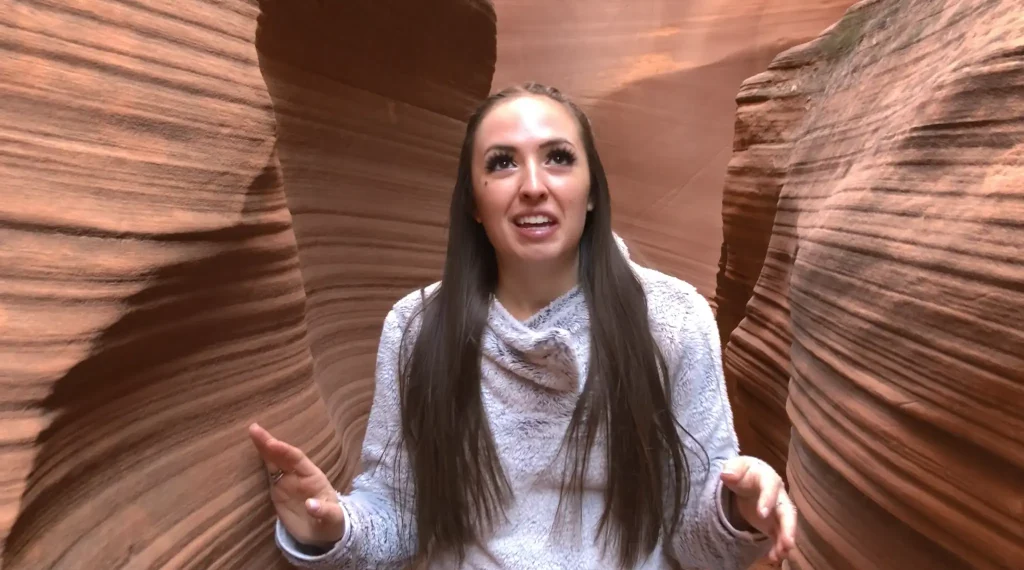
Slot canyons are narrow, steep-walled gorges that often appear to have been carved in a straight line, winding and twisting through rock formations. Geologically speaking, a slot canyon begins as a small crack or fracture in the earth’s surface that over millennia undergoes significant erosion, primarily from water, but also influenced by wind and other weathering forces. The process that forms slot canyons can be broken down into a series of steps.
1. Initial Fracturing and Weakening of the Rock
The geological foundation of a slot canyon begins with the formation of cracks or fractures in the rock layers. These cracks can be caused by tectonic forces, such as the movement of the earth’s crust, or by the natural expansion and contraction of rock due to temperature changes. In desert regions, where daytime temperatures can soar and nighttime temperatures plummet, rock expands and contracts, weakening over time.
The rock formations most likely to form slot canyons are sedimentary in nature. These include sandstone, limestone, and shale, which are made of layers of minerals and particles that have been compacted and cemented together over millions of years. Sedimentary rocks are relatively more susceptible to erosion compared to other types of rock, making them prime candidates for slot canyon formation.
2. Water as the Primary Erosive Force
Water is the primary force that sculpts slot canyons. The main method by which water erodes rock is through mechanical weathering and chemical dissolution. Water, in the form of rain, flows down through cracks and fractures in the rock. In areas with significant rainfall or those that experience periodic flash floods, the water can quickly accumulate and erode the rock, often carrying small particles with it. This erosion process can deepen and widen the initial cracks over time, slowly carving the narrow, winding passages that are characteristic of slot canyons.
In the desert, where rainfall is sparse, flash floods play a critical role in this process. While water typically moves slowly through dry desert terrain, a flash flood can bring an immense volume of water into a canyon system within minutes, rapidly eroding the rock and further sculpting the slot canyon.
3. Flash Floods and Their Role in Canyon Formation
Flash floods are sudden, intense surges of water that occur when heavy rain falls in a short period of time, typically in areas with dry, porous soils that cannot absorb water quickly. In desert environments, where slot canyons are most commonly found, the ground is often hardened by prolonged dry conditions, preventing water from being absorbed into the earth. Instead, the water flows rapidly across the surface, seeking the lowest points of elevation, such as dry washes, valleys, or gorges.
Flash floods create the ideal conditions for the rapid erosion of slot canyons. These floods can wash away loose debris, widen narrow cracks, and carve out the deep, winding corridors that make slot canyons so visually striking. Over thousands of years, multiple flash floods can deepen the slot canyon, forming its characteristic smooth, vertical walls and narrow passageways.
The speed and power of a flash flood is critical in the erosion process. Unlike regular, slower-moving water, a flash flood can quickly carve through rock, sometimes dislodging large boulders, creating a smooth, polished texture on the canyon walls, and sculpting narrow passages with dramatic curves and twists.
4. Long-Term Erosion and Canyon Evolution
Once a slot canyon begins to take shape, it continues to evolve through a combination of erosion processes. As flash floods periodically wash through the canyon, water continues to erode the rock layers, particularly in places where the rock is softer or more prone to weathering. Over time, the water can deepen the canyon, widen it slightly, and create the signature, serpentine patterns that slot canyons are known for.
The canyon walls themselves are shaped by this ongoing erosive process. Soft rock layers erode more quickly than harder ones, creating alternating bands of different textures and colors in the canyon walls. This variation in the rock’s resistance to erosion contributes to the unique beauty of each slot canyon, with some sections appearing smooth and flowing while others are jagged or rough.
Famous Slot Canyons Around the World

While slot canyons can be found in deserts around the world, some regions are particularly known for their remarkable slot canyon formations. The American Southwest is home to many of the most famous slot canyons, including Antelope Canyon, a world-renowned example of this natural phenomenon.
1. Antelope Canyon, Arizona
Antelope Canyon, located in the American Southwest near Page, Arizona, is one of the most famous slot canyons in the world. Its narrow passageways and smooth, flowing rock walls have made it a popular destination for photographers and nature lovers alike. The forces on nature have created a particularly beautiful area. The canyon offers a number of sections that travelers can visit: Upper Antelope Canyon, Lower Antelope Canyon, Mystical Antelope Canyon, Secret Antelope Canyon, and Antelope Canyon X, each with its own unique characteristics.
Upper Antelope Canyon, also known as “The Crack,” is famous for its large, open passageways. The interplay of light and shadow in the canyon’s narrow corridors creates a surreal, almost otherworldly atmosphere, particularly when the sun is high overhead and shafts of light beam down into the canyon floor. The red and orange hues of the canyon walls are due to the iron oxide present in the sandstone, creating a warm and captivating landscape.
Lower Antelope Canyon is a narrow, twisting section of the slot canyon, offering an adventurous feel to the experience, and requiring visitors to climb ladders and squeeze through tighter spaces. The formations in Lower Antelope Canyon are also unique, with more twists and turns, creating intricate patterns on the canyon walls.
Secret Antelope Canyon is a beautiful section with gorgeous curves, lines and formations. Small groups visit this section, which allows a more intimate and semi-private feel. It is the only section that allows visitors to video their experience.
Antelope Canyon X offers a unique area to explore two different sections of the slot canyon. It has high canyon walls, with exquisite shapes and forms, including the beautiful Lady in Red rock formation. It is less crowded than some sections, and offers a wonderful experience.
Mystical Antelope Canyon is one of more newly opened sections, which results in a less crowded experience, while still offering incredible views sites. It is slightly more challenging to walk through, but worth the effort to see this amazing section. Colors, shapes and formations will dazzle visitors.
All sections of Antelope Canyon were formed by flash flooding, which has shaped the canyon’s smooth, curvaceous walls. The Navajo Nation, which owns the land surrounding Antelope Canyon, has allowed limited public access, ensuring that the canyon remains protected while still being accessible to visitors. Every section must be visited as part of an organized tour, and will include a Navajo guide to lead the walk through the canyon.
2. The Wave, Arizona
Another famous slot canyon located in Arizona is The Wave, located in the Paria Canyon-Vermilion Cliffs Wilderness area. The Wave is known for its undulating, wavy sandstone formations that appear to ripple across the desert floor, creating a mesmerizing visual effect. The rock layers here were formed by ancient sand dunes, and the erosion caused by wind and water has created a stunning landscape of narrow slot-like corridors and smooth, flowing rock formations.
Unlike Antelope Canyon, The Wave is not strictly a slot canyon, but its rock formations and the narrow passageways within it make it a close relative. Due to its remote location and the fragility of the landscape, access to The Wave is highly restricted, and visitors must obtain permits through a lottery system.
3. Buckskin Gulch, Utah
Buckskin Gulch is another famous slot canyon, located in the Paria Canyon Wilderness in Utah. It is often considered one of the longest and deepest slot canyons in the world. Unlike Antelope Canyon, which is relatively short, Buckskin Gulch stretches over 20 miles and reaches depths of up to 200 feet in some places.
The canyon’s rock walls are a striking combination of reddish-brown sandstone, with some sections so narrow that visitors must squeeze through the passageways. Flash floods are still a concern in Buckskin Gulch, and hikers are advised to be cautious and aware of the weather conditions before venturing into the canyon.
The Role of Flash Floods in Slot Canyon Safety
Flash floods are an essential part of the erosion process that shapes slot canyons, but they also pose a significant risk to those who visit these areas. Many slot canyons, including Antelope Canyon and Buckskin Gulch, are subject to flash flooding, even during periods of dry weather. Flash floods can occur suddenly, with little warning, and can transform a peaceful canyon into a raging torrent within minutes.
To ensure safety, most slot canyons are accessible only with a guide, to make sure that visitors are safe, especially during the monsoon season when flash floods are more common. Local companies, guides, and the Navajo Parks and Recreation will monitor the weather and close the slot canyon to visitors if necessary to keep them safe.
Conclusion
Slot canyons are some of the most beautiful and fascinating natural formations in the world, born from the forces of water, wind, and time. Their narrow passageways and smooth, flowing rock walls are the result of the slow, steady erosion caused by flash floods and other erosive processes. From the famous Antelope Canyon in Arizona to the remote Buckskin Gulch in Utah, these natural wonders continue to captivate people with their otherworldly beauty and the geologic forces that created them.
Flash floods play a central role in the creation of slot canyons, carving deep, narrow gorges into the landscape and shaping the canyon walls over thousands of years. The geology of slot canyons, including the layers of sandstone and the interplay of rock hardness and erosion, contributes to their unique appearance. Whether it’s the smooth, curving walls of Antelope Canyon or the sweeping, wavy formations of The Wave, each slot canyon offers a glimpse into the power of nature and the intricate processes that continue to shape our planet.

